A Crew Death on P&O Arvia—and the Quiet Safety Test Ahead
A P&O Cruises crewmember died in a lift-shaft accident aboard Arvia on October 26, 2025, while the ship sailed from Southampton toward Tenerife. The...
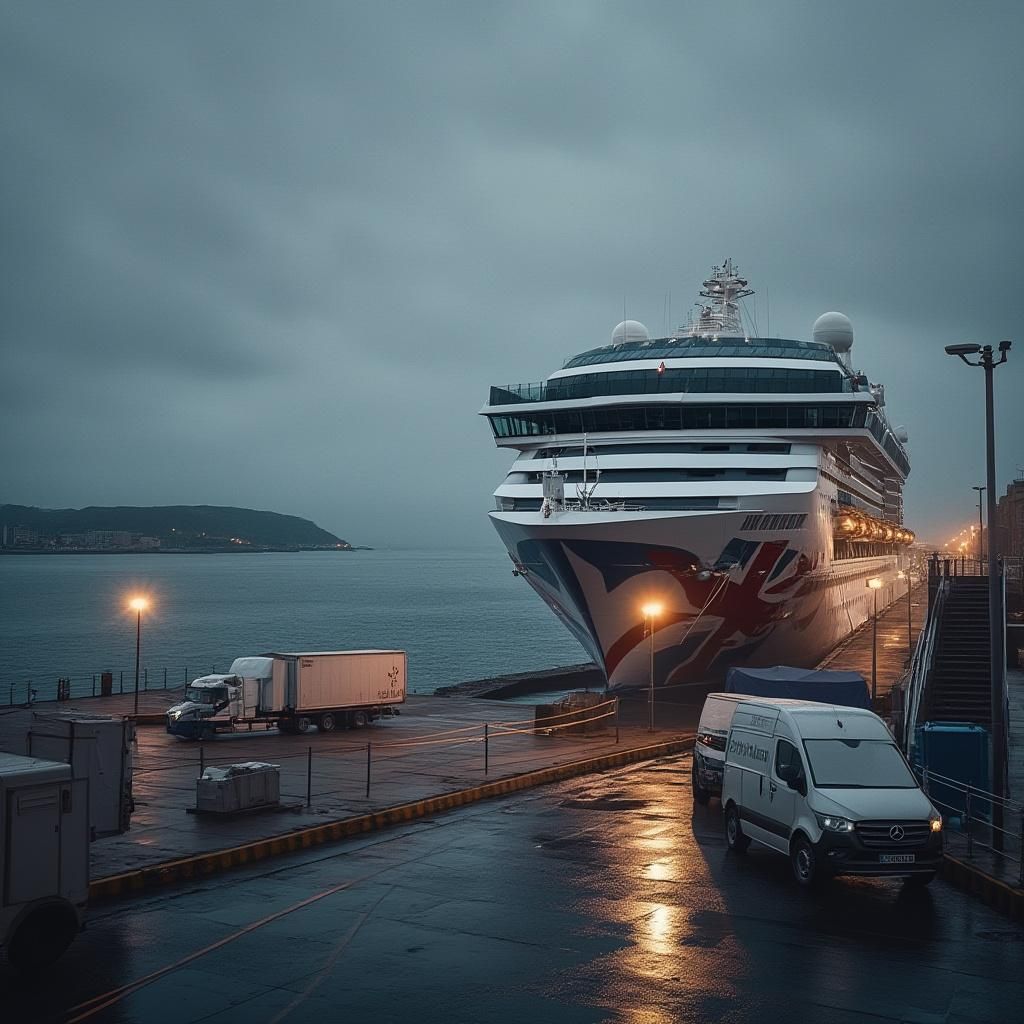
A P&O Cruises crewmember died in a lift-shaft accident aboard Arvia on October 26, 2025, while the ship sailed from Southampton toward Tenerife. The Bermuda-flagged vessel made an unscheduled stop in A Coruña, Spain, as authorities moved to investigate.
According to BBC News, Bermuda—the ship’s flag state—requested an investigation, and the UK’s Marine Accident Investigation Branch (MAIB) said it will board at the next port for a preliminary assessment. P&O Cruises issued condolences and said it is supporting the crewmember’s family. Details about the victim have not been released pending notification and investigative protocols.
What we know—and what’s next
The facts are sparse by design. Early maritime accident reporting prioritizes securing the scene and preserving evidence. BBC reports the incident involved an elevator shaft and occurred October 26, 2025; Arvia then diverted to A Coruña. MAIB plans to conduct an initial assessment on arrival at the next port, a standard step that determines whether a full safety investigation is warranted.
P&O, part of Carnival Corporation, has not disclosed operational changes beyond the diversion. That can be normal in the first 48–72 hours as investigators catalog the area, interview witnesses, and assess ship systems. For passengers, that often translates into limited public updates until authorities provide clearance to share more.
Quick context: MAIB’s mandate is to improve safety at sea by investigating accidents and publishing evidence-based findings, not to assign blame or liability. For foreign-flagged ships like Arvia (Bermuda), MAIB can act at the flag state’s request or if the incident intersects UK waters or interests.
Quick stats at a glance
- Incident: fatal lift-shaft accident involving a crewmember
- Date: October 26, 2025
- Ship: Arvia (P&O Cruises)
- Flag: Bermuda
- Route: Southampton to Tenerife
- Diversion: unscheduled call in A Coruña, Spain
- Investigators: Bermuda flag state requested; MAIB to conduct preliminary assessment
Who’s in charge when a death occurs at sea
Jurisdiction at sea runs through the flag state—the country where a ship is registered. Bermuda, as Arvia’s registry, has the lead. BBC reports Bermuda requested an investigation and MAIB will board to perform a preliminary assessment. That dovetails with how complex maritime cases typically work: flag-state oversight with technical support from specialized agencies like MAIB.
MAIB’s process usually unfolds in phases: initial fact-finding, a decision on whether to open a full investigation, and—if warranted—a published report with safety recommendations. If MAIB identifies an urgent risk, it can issue a safety bulletin quickly to alert operators before a final report lands.
Spanish port-state authorities may offer local assistance given the diversion to A Coruña, but the core safety investigation flows through the flag state’s framework.
Why elevator spaces pose unique risks for crew
Lift machinery spaces and shafts are tightly controlled, high-risk work zones. Crew who service them may face hazards common in industrial settings: confined spaces, moving equipment, and the need for rigorous lockout/tagout procedures to ensure systems are de-energized before work begins. Cruise ships add the complexity of vibration, motion, and a 24/7 operational environment.
It’s too early to draw conclusions about this case. But historically, serious incidents in these areas often highlight breakdowns in one of three layers: procedures (how work is planned), supervision (how it’s controlled), or barriers (engineering and administrative safeguards). Investigation reports in the maritime sector tend to focus on those systemic layers rather than individual fault, because that’s where prevention lives.
What this means for passengers on Arvia now
- Expect measured communication. Operators typically relay only confirmed information until investigators finish their early site work.
- Minor itinerary changes are possible. Diversions, delayed departures, or adjusted port calls can flow from evidence preservation and crew availability.
- Onboard services near the affected area may be restricted temporarily for safety and inspection access.
If you’re boarding soon, monitor direct messages from P&O and your travel agent, and keep the cruise line app and email notifications on. For those already aboard, guest services should be your first stop for practical updates.
Pros and cons of continuing the sailing after a serious incident
- Pros: Investigators can assess systems in real operating conditions; the ship maintains stability of services for guests; crew workloads are more predictable at sea than in an extended ad-hoc port stay.
- Cons: Emotional weight for crew and guests; short-notice operational workarounds; potential for subsequent schedule tweaks as authorities require access.
The broader safety picture—and what to watch
Cruise safety is built around the International Safety Management (ISM) Code: detailed procedures, drills, and audits designed to reduce human error and improve system reliability. When tragedies occur, the investigative focus is usually on whether the procedures were adequate, understood, and followed—and whether engineering controls were sufficient.
In the coming weeks, watch for:
- A decision from MAIB on whether it will open a full investigation after its preliminary assessment.
- Any interim safety bulletins if investigators identify urgent risks.
- P&O’s internal corrective actions (procedure changes, additional training, or engineering modifications) once authorities permit disclosure.
Credible counterpoint: Cruise operators already operate under intense audit regimes, and serious onboard technical incidents are rare relative to the scale of operations. That said, low frequency doesn’t negate the need for relentless rigor—especially in spaces where a single misstep can be catastrophic.
Summary
- A P&O crew member died in an elevator-shaft incident on Arvia on October 26, 2025, per BBC.
- Bermuda requested an investigation; MAIB will board at the next port for a preliminary assessment.
- Arvia diverted to A Coruña; P&O expressed condolences and is supporting the family.
- Expect tight-lipped updates until investigators finish initial work; minor itinerary impacts are possible.
Bottom line
This is a painful moment for P&O’s crew and guests—and a live test of maritime safety systems that are designed to learn fast. The most important updates now won’t be marketing lines or schedule tweaks; they’ll be clear, actionable findings about procedures and safeguards in one of a ship’s most unforgiving technical spaces.
Related Posts

The Frightfully Fun Parade Is Gone. What Disneyland Is Doing Instead Is Way More Interesting.
Read more
Disney Cruise Line Quietly Tightened Three Rules This Week — and One of Them Will Sting
Read more
Universal Has a July Opening Date — And It's Unlike Any Park They've Ever Built
Read more