China’s new port fee targets U.S.-linked ships—here’s who pays
China has introduced a new port charge that, according to Cruise Industry News, specifically targets U.S.-linked vessels starting October 14, 2025—and...
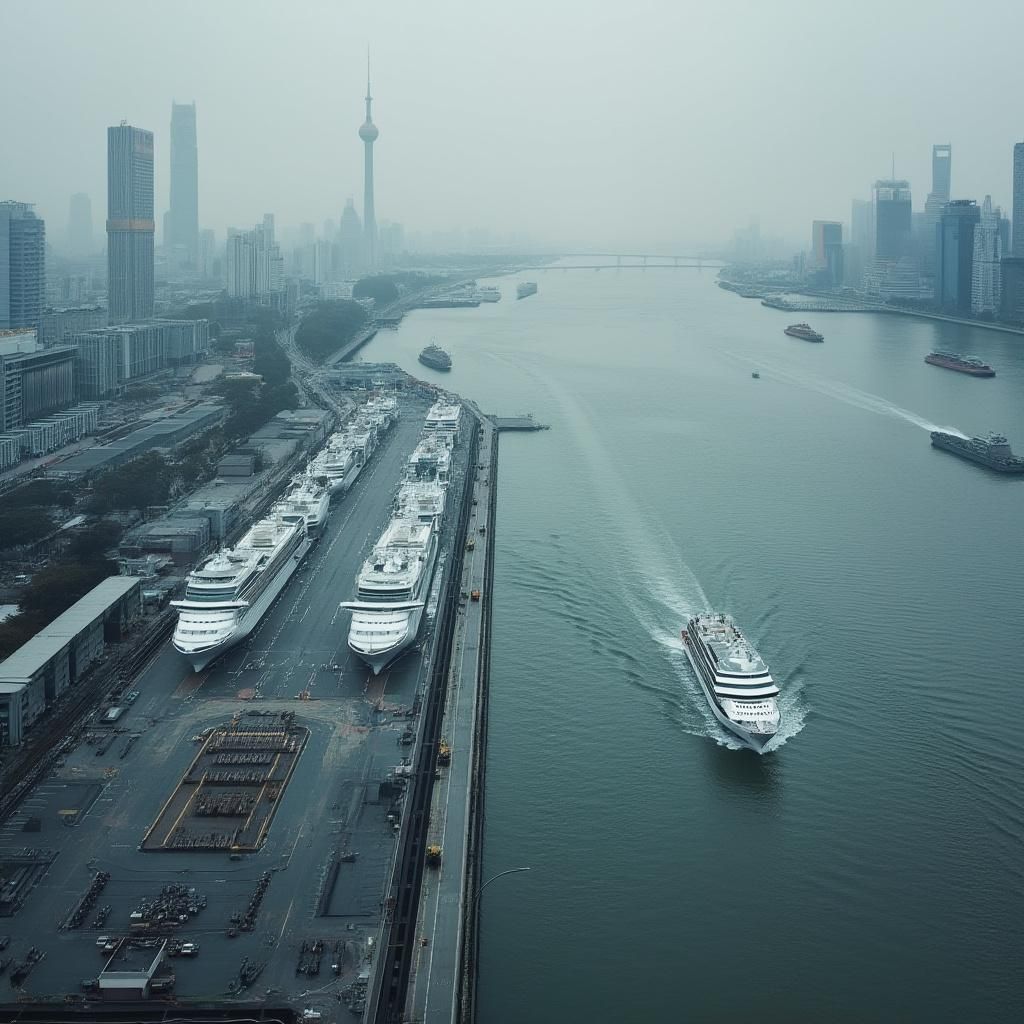
China has introduced a new port charge that, according to Cruise Industry News, specifically targets U.S.-linked vessels starting October 14, 2025—and cruise lines are already reshuffling itineraries. One early casualty: an Oceania Cruises ship canceled a Shanghai call.
What changed—and why it matters now
Per Cruise Industry News, the policy sets a special fee beginning at RMB 400 per net ton, rising annually, and applies to ships tied to the United States. Net tonnage is a measure of a vessel’s internal volume, not weight; for large cruise ships, it’s a big number. That’s the problem.
This isn’t a minor surcharge. For high-capacity ships, a per-ton fee compounds quickly, potentially turning a single-day call into a line-item that overwhelms port budgets. Analysts interviewed by industry outlets warn the math could be prohibitive for big ships and may push operators to reroute, shorten stays, or skip mainland Chinese ports entirely.
Early signals suggest the market is already adjusting. Cruise Industry News reports the planned visit of Oceania Cruises’ Riviera to Shanghai has been scrapped following the fee announcement.
The immediate hit: Shanghai calls and beyond
Shanghai is a marquee call in Northeast Asia, a gateway for international travelers and home to headline-grabbing skyline sail-ins. Losing even a handful of calls dents local tourism spend and weakens the region’s cruise network effect (fewer ships mean fewer choices, which can dampen demand).
According to the industry reporting, the new charge is aimed at U.S.-linked vessels. That category could include ships owned by U.S.-based companies or otherwise connected commercially or operationally to the U.S., though authorities have not publicly circulated a detailed technical definition in the reports cited. That ambiguity alone creates planning risk for itinerary teams.
If you’re a deployment planner, the knock-on effects are clear:
- Itinerary stability gets harder. A pricey call can upend a voyage’s economics.
- Shore ops and tour partners face last-minute changes, which can erode guest satisfaction.
- Pricing pressure rises as lines absorb or pass along costs.
How cruise lines could adapt
Cruise companies have playbooks for policy shocks. Expect a mix of near-term swaps and longer-term redeployments:
- Replace mainland calls with nearby alternatives. Japan (Yokohama, Kobe, Nagasaki), South Korea (Busan, Jeju), Taiwan (Keelung), and Hong Kong are frequent substitutes on Asia itineraries.
- Shorten or skip calls to rebalance budgets, especially on voyages with tight margins.
- Reposition ships to Southeast Asia or Australia during peak seasons if repeated mainland calls become uneconomical.
None of these fixes are perfect. Japan is already congested on peak days. Hong Kong is a world-class port but adds distance for North Asia loops. And Southeast Asia shifts can change the itinerary style entirely. But lines are skilled at reworking routes without torpedoing guest value, particularly when they move quickly and communicate clearly.
What it could mean for travelers
For guests, the most visible changes will likely be:
- Itinerary updates. Expect some China calls to morph into Japan or Korea days, or for schedules to reorder with additional sea days.
- Shore excursion tweaks. If your tour hinged on a Shanghai landmark, a switch to Busan or Keelung means a different culture and cuisine—silver lining if you’re adventurous.
- Possible fare pressure. If the policy sticks and spreads, costs must land somewhere. Lines may try to shield core prices and adjust through onboard spending strategies, but premium sailings could creep up.
Bookers should watch for change notices from their cruise line, review cancellation and change policies, and keep a flexible mindset on port specifics while focusing on the overall region and ship experience.
The bigger picture: signaling and strategy
The targeted nature of the fee—reported to apply to U.S.-linked vessels—adds a layer of geopolitical complexity to what’s usually a commercial negotiation between ports and operators. Even without assigning motives, the effect is straightforward: higher and rising call costs that single out a major slice of the global cruise fleet.
Ports and destinations compete for cruise traffic, and pricing is part of that competition. If China’s fee remains in force and escalates annually, cruise lines will reassess the value proposition of mainland calls versus regional alternatives. A few marquee turnarounds might stay if economics work, but the bar just got higher.
Quick stats to know
- Start date: October 14, 2025 (reported)
- Initial rate: RMB 400 per net ton
- Escalation: Rises annually (details not publicly specified in the cited report)
- Scope: U.S.-linked vessels, per Cruise Industry News
- Immediate impact noted: Oceania Cruises’ Riviera Shanghai call canceled
Pros and cons at a glance
Pros (for ports imposing the fee):
- Higher per-call revenue from targeted vessels
- Potential leverage in commercial negotiations
Cons (for cruise lines and destinations):
- Fewer or shorter calls to manage costs
- Itinerary uncertainty and guest dissatisfaction risk
- Possible redeployments that shift tourism spend to other markets
What to watch next
- Definitions and exemptions: Clear guidance on what counts as “U.S.-linked” would reduce planning uncertainty.
- Annual escalator details: The pace of increases will shape long-term deployment decisions.
- Competitive responses: Expect nearby ports to court displaced calls with streamlined processes and predictable fees.
- Line-by-line moves: Premium and luxury brands with smaller ships may find niche pathways; megaship operators may pivot more decisively.
Bottom line
According to Cruise Industry News, China’s new port fee is both large and targeted—and cruise lines are already blinking. The policy introduces costs that can overpower a port day’s economics for big ships, with a built-in annual rise that compounds the pressure. Travelers should expect some rerouting in the short term, while the industry tests alternates across Northeast and Southeast Asia. If the fee endures without carve-outs, mainland calls from U.S.-linked vessels will likely shrink, and the region’s cruise map will quietly redraw around them.
In brief: what you need to know
- A new China port fee (RMB 400 per net ton from October 14, 2025) targets U.S.-linked ships.
- Oceania Cruises’ Riviera canceled a planned Shanghai call following the change.
- Lines may shift calls to Japan, South Korea, Taiwan, or Hong Kong.
- Expect itinerary changes; fare impacts are possible if costs persist.
Summary
- New, targeted fee raises the cost of calling at mainland China ports.
- Large ships face the biggest economic squeeze.
- Early cancellations suggest more itinerary shifts ahead.
- Regional ports could be the near-term winners.
- Travelers should monitor updates and stay flexible.
Related Posts

The Frightfully Fun Parade Is Gone. What Disneyland Is Doing Instead Is Way More Interesting.
Read more
Disney Cruise Line Quietly Tightened Three Rules This Week — and One of Them Will Sting
Read more
Universal Has a July Opening Date — And It's Unlike Any Park They've Ever Built
Read more