Driverless Cars Just Pulled Up to Your Disney and Universal Trip—Here’s What That Actually Means
If you have ever white-knuckled your way through the I-4 corridor after a long day at the parks, this news is for you. Waymo, the autonomous vehicle company...
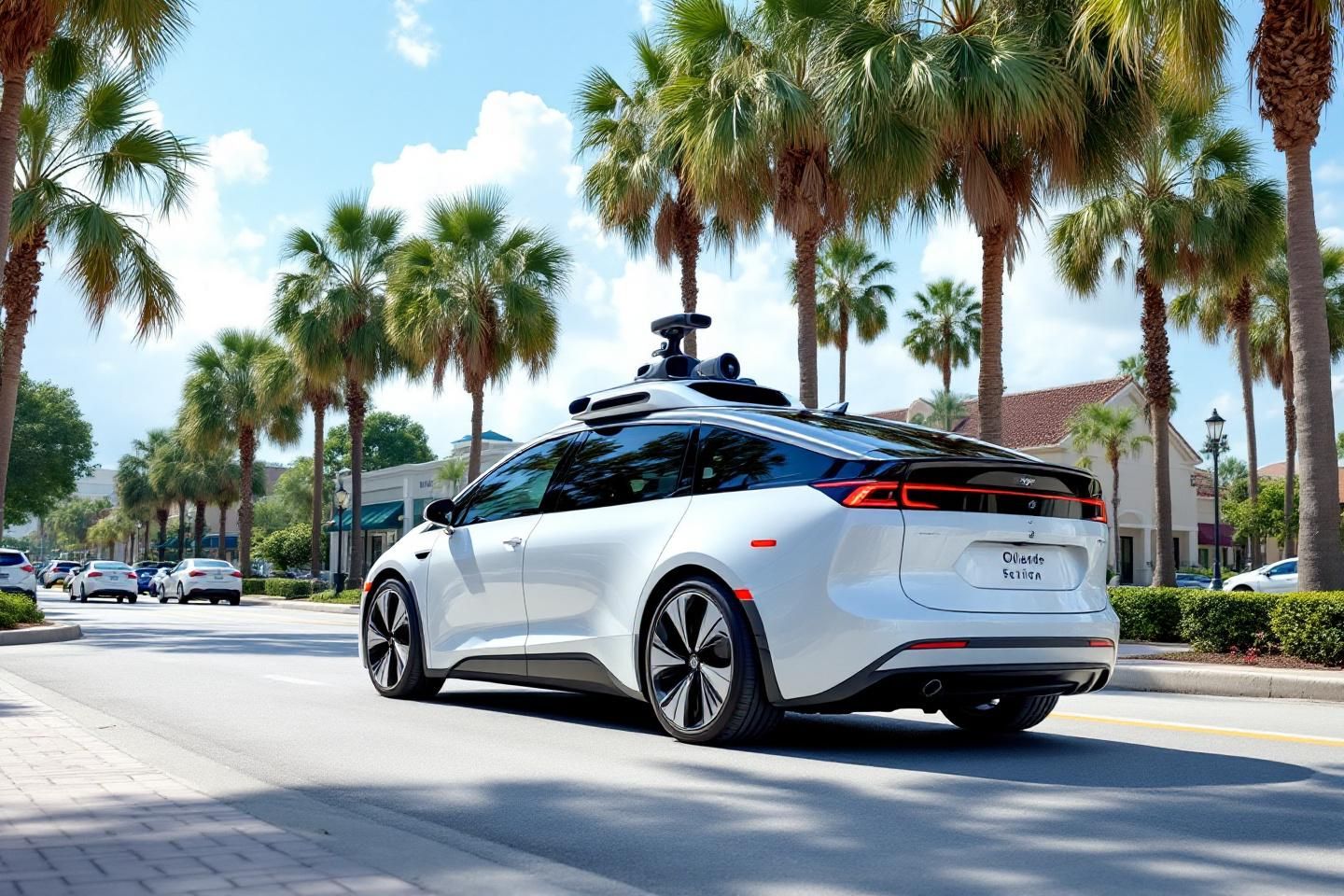
If you have ever white-knuckled your way through the I-4 corridor after a long day at the parks, this news is for you. Waymo, the autonomous vehicle company owned by Alphabet (Google’s parent), officially launched its driverless ride-hailing service in Orlando on February 24, 2026—and the coverage zone includes Universal Orlando Resort and parts of Walt Disney World, according to Disney Fanatic.
No human driver. No surge pricing negotiations. No awkward small talk at the end of a 12-hour park day. Just a Jaguar I-PACE loaded with cameras, radar, and lidar sensors, pulling up to the curb and taking you wherever you need to go.
This is not a test. This is the real thing—and it launched yesterday.
What Just Happened
Waymo expanded its fully autonomous ride-hailing service to four new cities simultaneously: Dallas, Houston, San Antonio, and Orlando. That makes Orlando one of only 10 metro areas in the United States where you can currently hail a completely driverless car through the Waymo app.
Orlando’s launch is significant in ways the other cities are not. As one of the most visited tourist destinations on the planet, the region presents challenges that domestic tech rollouts rarely have to reckon with: unpredictable rental car drivers, massive pedestrian volumes around park entrances, complex road systems, and visitors from dozens of countries who are simply not familiar with local traffic patterns. If Waymo can make it work here, it can make it work anywhere.
Mayor Buddy Dyer called the launch a sign that “our visitors will be welcomed with the world class mobility they deserve,” which is the kind of thing mayors say—but in this case, there is something real behind it.
What the Coverage Actually Looks Like (And Where It Falls Short)
Here is where it gets practical. Universal Orlando Resort is reportedly well-covered by Waymo’s service area—the compact footprint of that resort makes it a natural fit. If you are staying off-property near International Drive or arriving at Universal from an Orlando-area hotel, Waymo may genuinely be a seamless option for getting to and from the parks.
Walt Disney World is a different story. At 25,000 acres, Disney World is massive, and Waymo’s coverage reportedly extends only to “parts” of the property. Which parts? That information has not been publicly disclosed. This is important for trip planning: if you are staying at a Disney resort hotel deep in the property, you may not be in the service zone. If you are staying off-property and just need a ride to Disney Springs or one of the gate areas, you may have better luck.
Orlando International Airport is included in the coverage zone, which is potentially the single most useful detail for any incoming visitor. If the service area connects MCO to the resort corridor by the time your trip arrives, you could skip the rideshare roulette entirely.
This Is Still an Invitation-Only Launch
One important caveat: Waymo is not flipping on the lights for everyone at once. The current rollout is invitation-based, meaning you need to download the Waymo app and wait to receive an invitation before you can book a ride. The company has said it will open access to all riders “later in 2026” as operations scale.
For visitors planning trips in the coming months, this means Waymo may or may not be available to you by the time you land at MCO. It is worth downloading the app now if you are curious—the invitation system prioritizes people who have already registered interest.
Why This Matters Beyond the Novelty Factor
For theme park visitors, transportation logistics are not a minor inconvenience. They are a genuine cost center. Rental cars at MCO add up fast, especially when you factor in parking fees at the parks (Disney World and Universal both charge for parking). Rideshare pricing surges during morning park-open windows and evening close times when thousands of guests are all trying to leave simultaneously. Off-property hotel guests especially feel this pinch.
If Waymo builds out its service area and pricing is competitive with Uber and Lyft, it could meaningfully change the math for budget-conscious travelers. The company has reported a ten-fold reduction in serious injury or worse crashes compared to human drivers across more than 127 million autonomous miles—which, if it holds in the tourist-dense Orlando environment, addresses the single biggest concern most people have about getting into a car with no one at the wheel.
The flip side: driverless cars still feel deeply strange to most people. The technology that makes them work—the sensor pods on the roof, the absence of a driver, the occasional pause at an ambiguous intersection—requires a certain tolerance for novelty that not every traveler has. For families traveling with young kids who are already managing a lot of new stimulation, this may simply not be the week to experiment.
What to Watch Going Forward
Waymo has signaled aggressive growth goals for Orlando, targeting over one million rides weekly by the end of 2026. That number, if achieved, would make Orlando one of the company’s highest-volume markets. It also suggests that the current invitation-only phase is intentionally temporary—the infrastructure is being built to handle serious scale.
We will be watching to see how quickly the service area expands to cover more of Disney World’s footprint and whether pricing settles into a competitive range with traditional rideshare options. For a destination where transportation is one of the most consistent friction points in the guest experience, autonomous vehicles arriving in force could quietly become one of the most impactful travel developments of the year.
For now: download the app, request an invitation, and see what happens. The future of getting to the parks just pulled up to the curb.
Related Posts

The Frightfully Fun Parade Is Gone. What Disneyland Is Doing Instead Is Way More Interesting.
Read more
Disney Cruise Line Quietly Tightened Three Rules This Week — and One of Them Will Sting
Read more
Universal Has a July Opening Date — And It's Unlike Any Park They've Ever Built
Read more