
Inside Disney’s $8B Florida Bet—and What It Could Mean for You
Disney just put a big number on the table in Orlando. According to Bloomberg on June 5, 2024, the company plans to spend about $8 billion at Walt Disney...
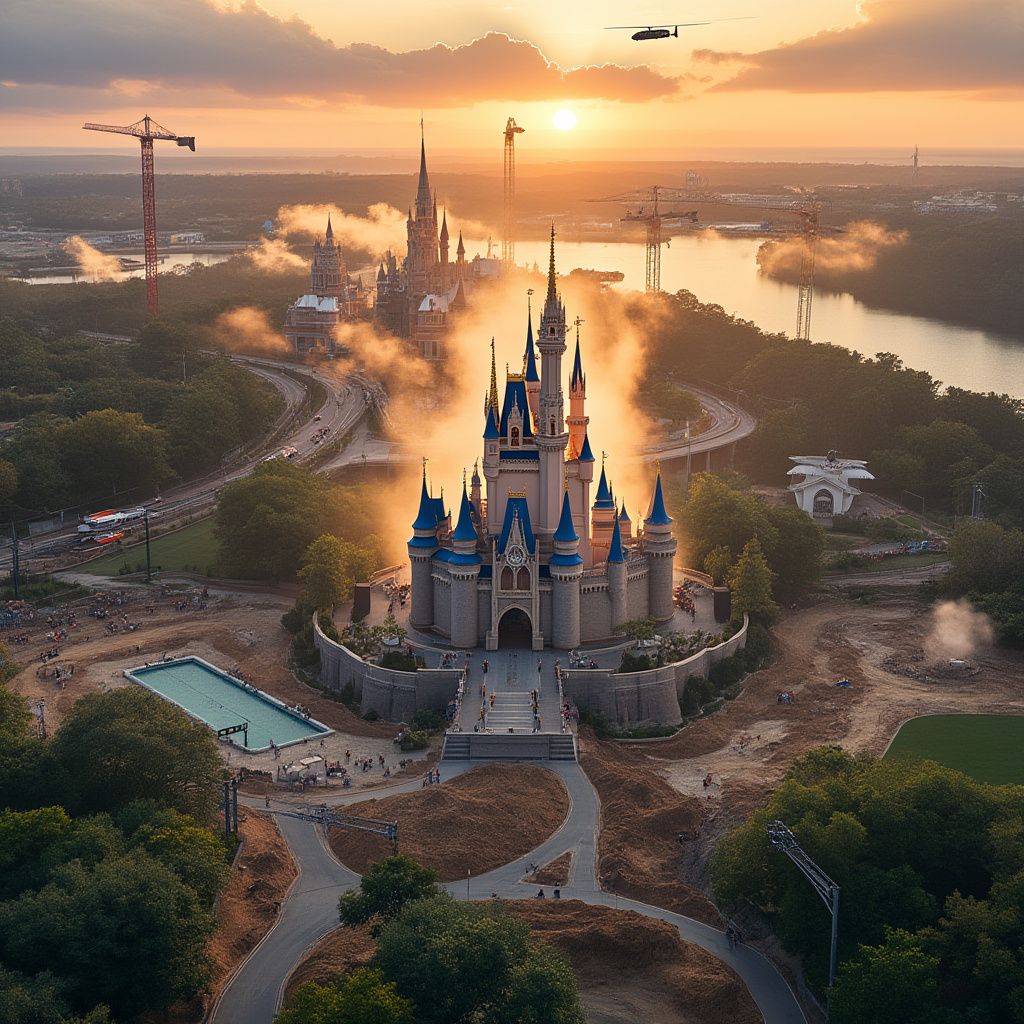
Disney just put a big number on the table in Orlando. According to Bloomberg on June 5, 2024, the company plans to spend about $8 billion at Walt Disney World over the next decade—part of a broader multiyear expansion push. Here’s what’s driving the move, how the money might be used, and what guests should realistically expect.
Why an $8B push in Florida—and why now
Per Bloomberg, Disney earmarked roughly $8 billion for its Florida resort as part of a 10‑year plan. That sits within an earlier, headline $60 billion, decade-long capital program for parks, resorts, and the cruise line, first outlined by Disney in September 2023 and reported by Reuters.
This timing tracks with two realities. First, competitive pressure in Orlando is about to intensify. Comcast’s Universal is launching the new Epic Universe theme park in 2025, a once-in-a-generation capacity boost across town, as noted by Reuters. Second, political turbulence that clouded Disney’s development plans in 2023 eased in April 2024, when Disney and the state-appointed Central Florida Tourism Oversight District settled their lawsuits, clearing the way for new planning talks, according to the Associated Press.
The bottom line: the runway is clearer, and the competition is louder. Disney needs added capacity, fresher IP, and smoother operations to defend—then grow—market share in Central Florida.
What that check could actually buy at Walt Disney World
Disney hasn’t issued a line‑item shopping list for the $8B. But the company has telegraphed priorities. In September 2023, Disney’s Imagineering leaders publicly teased a “Tropical Americas” reimagining of DinoLand U.S.A. at Animal Kingdom and continued to hint at the “beyond Big Thunder” expansion potential at Magic Kingdom—concepts shared as early-stage “blue sky” ideas on the Disney Parks Blog.
Read that as: more capacity anchored in familiar franchises, plus modernization where it counts. Expect spending to fall into a few buckets:
- New lands and attractions tied to high-performing IP
- Park capacity upgrades (people-eating rides, theaters, and walkways)
- Resort refreshes and possibly new lodging to support longer stays
- Transportation and infrastructure (think roads, utilities, and quieter but crucial fixes)
If you’re waiting for a specific attraction list or opening dates, keep expectations measured until formal announcements drop. Disney tends to stage reveals around major fan and investor moments—and backs them with visible permitting and site work before timelines get concrete.
The political detour that opened the road again
For nearly two years, a governance fight with Florida complicated Disney World’s long-range planning. That cloud lifted when both sides settled in April 2024, per the AP. While the legal fine print didn’t automatically greenlight shovels in the ground, it removed a major overhang and reset the development framework. In practice, that means Disney can resume negotiating the sort of multi‑year agreements and infrastructure plans that underpin new lands, transportation links, and resort projects.
The practical takeaway for guests: less uncertainty. The company can plan at multi‑billion scale again, which is how you get large, cohesive expansions instead of piecemeal fixes.
The Universal factor: a new park across town changes the calculus
Universal’s Epic Universe arrives in 2025, bringing fresh IP clusters, hotels, and thousands of daily guests into the Orlando mix. As Reuters reported, it’s a direct capacity play that resets expectations for what a theme park day can look like in Florida.
Disney’s $8B Florida allocation reads like a counter-move and a confidence play. Capacity growth supports better crowd flow, which supports better guest satisfaction—and that supports spending on everything from Lightning Lane add‑ons to resort upgrades. If Disney times new attractions to crest after Epic Universe’s opening, it can keep demand pulsing rather than ceding the news cycle to its rival.
The ROI math: capacity, satisfaction, and spend
Capital projects at Disney parks have a predictable flywheel. New attractions add ride capacity and raise the “must-do” quotient, which boosts visits and length of stay. That, in turn, drives per-guest spend on food, merch, Genie+ and Lightning Lane purchases, and premium experiences. The flip side: the checks are big, the timelines are long, and misses are expensive. That’s why you’re seeing Disney cluster investments around proven franchises and park areas with room to grow.
Guests care most about two outcomes: shorter average waits and a clearer value proposition for what they pay. Big projects help both—but only if they layer on operational upgrades (think shade, mobile ordering capacity, parade and nighttime show crowd relief) and keep the tech tools feeling like a bonus, not a requirement.
Quick stats to frame the moment
- $8B: 10-year spend targeted for Walt Disney World (Bloomberg, June 5, 2024)
- $60B: Decade-long global parks and cruise investment plan (Reuters, September 19, 2023)
- 4 theme parks, 2 water parks at Walt Disney World (company facts)
- A new Orlando theme park opens in 2025—Universal’s Epic Universe (Reuters, January 30, 2024)
What to watch in 2025 if you’re planning a trip
- Permits and site work: Early construction filings and land clearing near Animal Kingdom or Magic Kingdom will be the first real tells before Disney makes splashy announcements.
- Investor-day tea leaves: Disney often outlines cadence and focus areas on earnings calls. Look for references to “capacity,” “throughput,” and “guest experience” tied to Florida.
- Opening windows vs. exact dates: Once a project is official, Disney tends to use seasons or years before it locks in a specific day. Budget your expectations accordingly.
Pros and cons of Disney’s Florida surge
Pros
- More rides and shows mean better distribution of crowds and fuller day value
- Infrastructure spend can quietly shorten pain points (transport, mobile orders, shade)
- Competitive pressure usually benefits guests with promotions or added perks
Cons
- Multi-year construction can mean walls, detours, and temporary closures
- Capital pressure may keep paid line-skipping tools central to the experience
- Big bets on specific IP can feel narrow if your family isn’t into those franchises
The smart read on the $8B headline
This isn’t a one-park facelift; it’s a decade-long rearmament for Disney’s flagship resort. Taken with the $60B global plan, the $8B Florida slice signals that Walt Disney World will get new capacity, refreshed experiences, and under-the-hood upgrades designed to lift satisfaction and spending—right as a new competitor roars to life up I‑4.
If Disney choreographs the rollout well, guests win with more to do and a smoother day. If timelines slip or projects skew too niche, the value equation gets tougher. Either way, the next few years in Orlando will be loud—and crowded.
TL;DR summary
- Bloomberg says Disney plans to invest about $8B at Walt Disney World over 10 years.
- The spend aligns with a broader $60B global parks-and-cruise plan reported by Reuters.
- A 2024 legal settlement in Florida reduces planning uncertainty for major builds.
- Universal’s Epic Universe opening in 2025 raises competitive stakes and urgency.
- Expect capacity additions, IP-led lands, and infrastructure upgrades over time.
Short timeline
- September 19, 2023: Disney outlines a $60B decade-long global parks-and-cruise plan (Reuters)
- September 9, 2023: Disney teases Animal Kingdom and Magic Kingdom expansion ideas (Disney Parks Blog)
- April 3, 2024: Disney and Florida’s oversight district settle lawsuits (AP)
- June 5, 2024: Bloomberg reports $8B earmarked for Florida over 10 years
- 2025: Universal’s Epic Universe opens, escalating the Orlando parks race (Reuters)
Related Posts

The Frightfully Fun Parade Is Gone. What Disneyland Is Doing Instead Is Way More Interesting.
Read more
Disney Cruise Line Quietly Tightened Three Rules This Week — and One of Them Will Sting
Read more
Universal Has a July Opening Date — And It's Unlike Any Park They've Ever Built
Read more