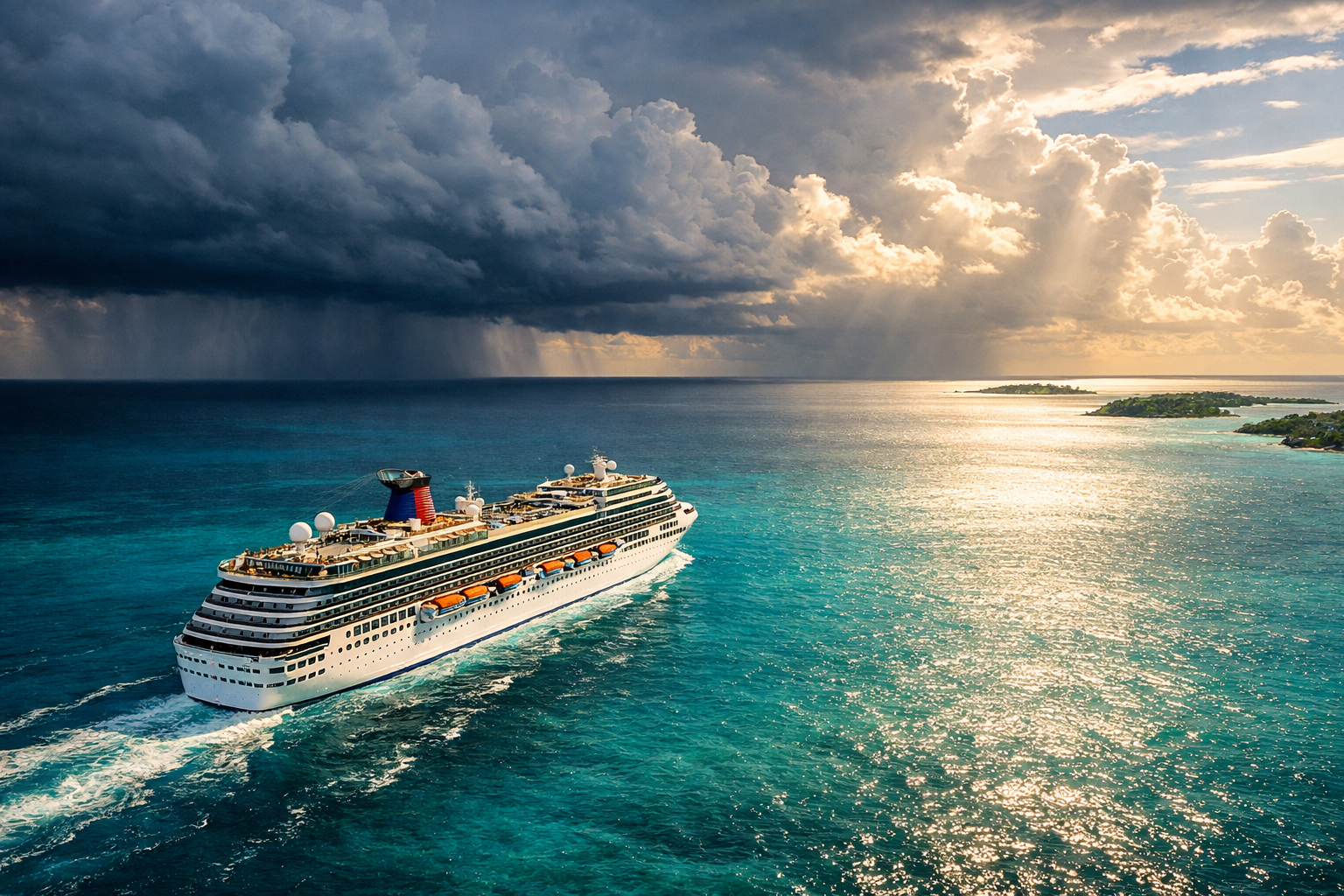
The Cruise Industry's Biggest What-If: A 95% Cleaner Ship That Could Sail by 2031
German shipbuilder Meyer Werft unveiled Project Vision at Seatrade Cruise Global — a fully battery-electric cruise ship concept that could cut greenhouse gas emissions by 95 percent and be delivered as early as 2031.
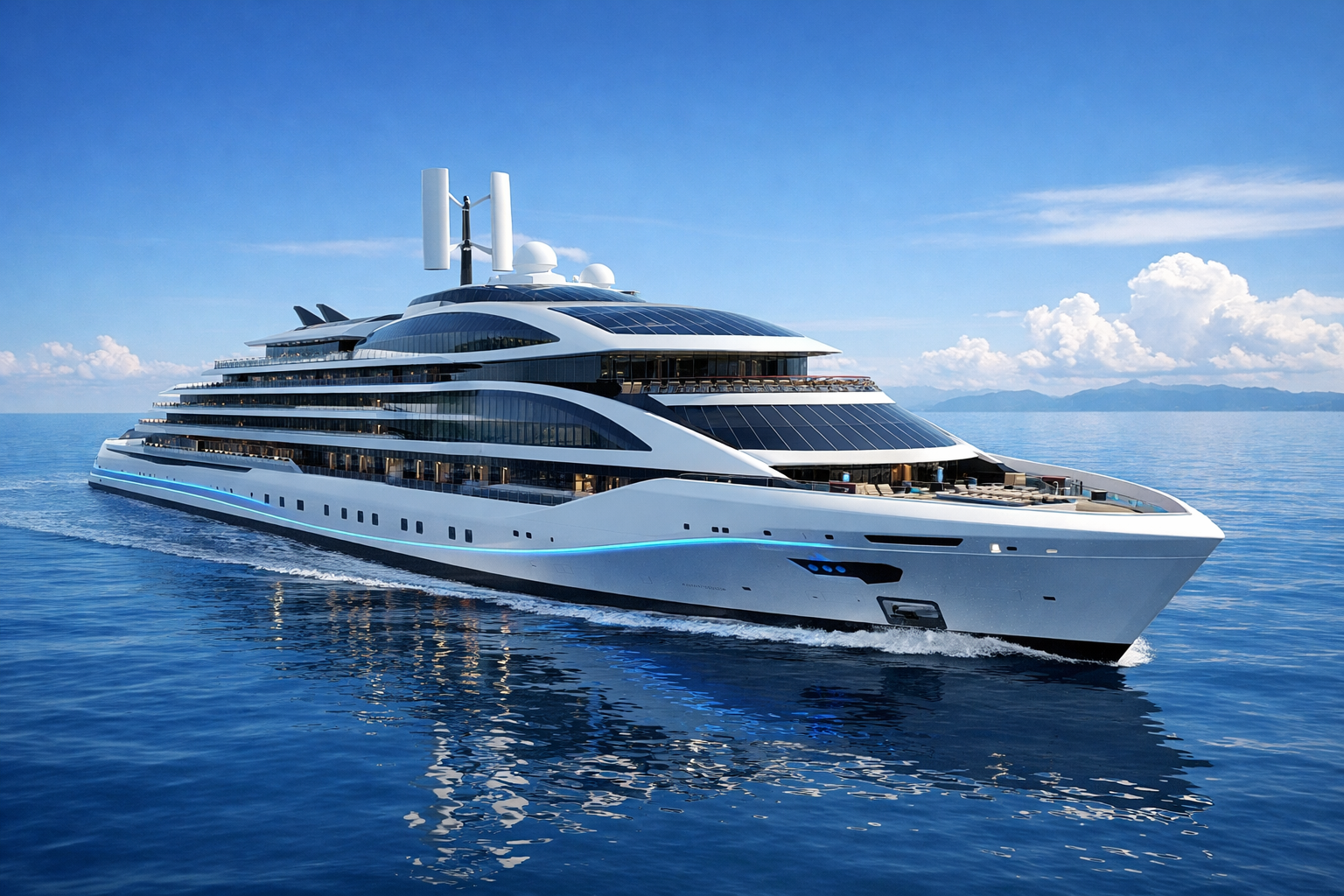
A fully battery-electric cruise ship is no longer a distant concept — at least according to one of the world’s most respected shipbuilders. This week at Seatrade Cruise Global in Miami, Germany’s Meyer Werft pulled back the curtain on Project Vision: a 1,856-passenger vessel that would run entirely on battery power for most European itineraries, producing up to 95 percent fewer greenhouse gas emissions than a conventional cruise ship.
According to Cruise Industry News, the shipyard says the technology to build this ship exists right now — and if a cruise line placed an order in 2026, Meyer Werft could deliver the first vessel as early as 2031.
What Project Vision Actually Is
Project Vision is a concept design — not a ship under construction — but it is grounded in real, existing technology rather than theoretical engineering. The vessel would measure 275 meters (roughly 902 feet) in length, gross approximately 88,000 tons, and carry just under 1,900 passengers. The battery system would be supplied by Corvus Energy, a Norwegian marine battery manufacturer.
The ship is designed primarily for shorter regional itineraries where ports can provide charging between sailings. Meyer Werft pointed to a Barcelona-to-Civitavecchia routing as an example of what the battery system can handle on a single charge. For longer routes — including transatlantic crossings — the design can be configured as a hybrid with small auxiliary generators.
Meyer Werft Chief Sales Officer Thomas Weigend was direct about the readiness of the technology: “The technology is available today. If ordered this year, we could already deliver the first ship in 2031.”
What This Ship Would Look Like — and Feel Like
This is where Project Vision gets genuinely interesting for anyone who has spent time on a cruise ship. When you eliminate conventional propulsion systems, you also eliminate a long list of things cruisers have simply learned to live with.
No main engines means dramatically reduced noise and vibration throughout the ship — something anyone who has been assigned a cabin near the aft engine room will immediately appreciate. No exhaust shafts or funnels means the sun deck can be fully reimagined, with unobstructed sightlines that current ship designs cannot offer. Meyer Werft has taken advantage of that freed-up space to incorporate a fully glazed, weather-protected aqua park at the stern — usable in conditions that would typically send deck-based attractions undercover.
The absence of the funnel and exhaust infrastructure is not a minor cosmetic change. Those systems run vertically through the ship and consume significant interior real estate on every deck they pass through. Removing them fundamentally changes what is architecturally possible.
The Infrastructure Question
The concept is compelling, but it does not exist in a vacuum. For a battery-electric fleet to function, ports need to be able to charge ships between sailings — and right now, maritime charging infrastructure is limited.
Meyer Werft acknowledged this directly. The shipyard estimates that approximately 100 European seaports will need to offer maritime charging infrastructure by 2030 for the concept to work at scale. That buildout is already underway in parts of Northern Europe, and several major Mediterranean ports have announced electrification timelines. Whether those timelines hold — and whether charging capacity scales fast enough to support active cruise deployment — is a legitimate open question.
The hybrid fallback option in the design is a practical hedge against that uncertainty. A ship that can run on battery power for the majority of its itinerary, with generators available when needed, is more commercially viable than a vessel that becomes stranded if charging infrastructure is delayed at a specific port.
What This Means for Cruise Passengers
Here is the honest take: Project Vision is not something you will be able to book for your 2027 vacation. Even under the most optimistic timeline — an order placed this year, delivery in 2031 — the ship would not be widely available to passengers until at least 2032 or 2033, after sea trials and initial deployment.
But the announcement matters for a few reasons. First, it signals that at least one major shipbuilder believes the technical and commercial case for battery-electric cruising is strong enough to present publicly to the industry’s biggest buyers. Seatrade Cruise Global is where cruise lines make procurement decisions, and Meyer Werft did not reveal this concept at an environmental conference — they revealed it in a room full of purchasing executives.
Second, it puts a number on what “cleaner cruising” could realistically mean. A 95 percent reduction in greenhouse gas emissions is not incremental progress. It would represent a category shift for an industry that has faced sustained pressure over its environmental footprint.
Third, if one cruise line moves forward with an order, others are likely to follow. The competitive dynamics of the cruise industry tend to accelerate adoption once a single major player commits to a new ship class.
We will be watching to see whether any cruise line takes Meyer Werft up on this. If they do, the nature of a Mediterranean or Northern European cruise could look quite different by the early 2030s — quieter, cleaner, and with considerably more deck space.
Source: Cruise Industry News
Related Posts
The Frightfully Fun Parade Is Gone. What Disneyland Is Doing Instead Is Way More Interesting.
Read more
Disney Cruise Line Quietly Tightened Three Rules This Week — and One of Them Will Sting
Read more
Universal Has a July Opening Date — And It's Unlike Any Park They've Ever Built
Read more