The World's Largest Sailing Yacht Just Set Sail — and It Runs Mostly on Wind
The world's largest sailing yacht just had its naming ceremony in France — and it's unlike anything the cruise industry has ever seen.
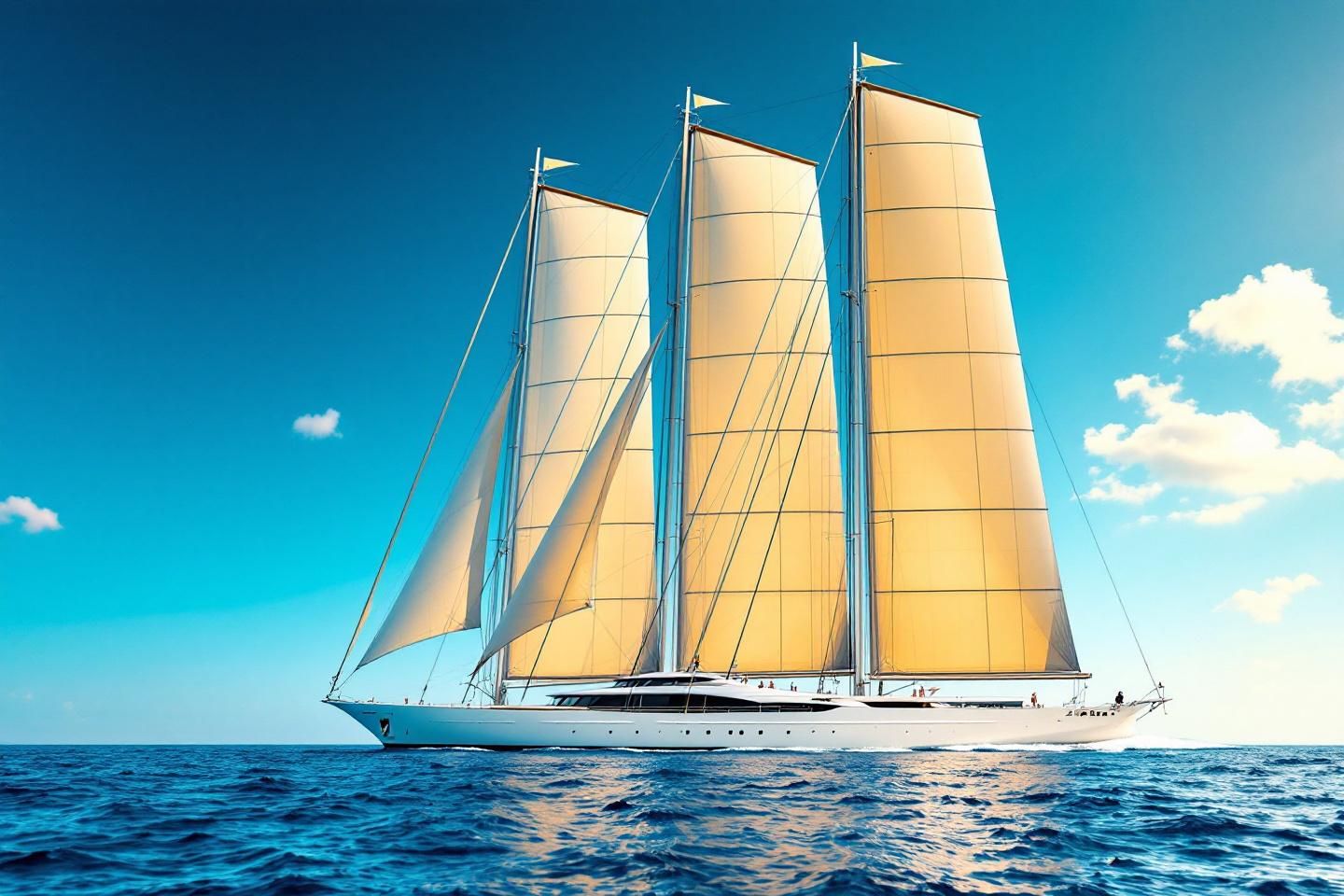
On April 29, 2026, something genuinely unusual happened in a French shipyard. A 720-foot vessel — roughly the length of two and a half football fields — was officially named at the Chantiers de l’Atlantique yard in Saint-Nazaire. That alone would be unremarkable; ships get christened all the time. What made this one different is that it carries three rigid sails, each spanning 1,500 square meters, rising more than 320 feet above the waterline and capable of rotating a full 360 degrees to catch the wind from any direction.
The Orient Express Corinthian is now the world’s largest sailing yacht, and it departed Saint-Nazaire on May 2 to begin its inaugural Mediterranean season. It is, by almost any measure, unlike anything currently sailing.
What Exactly Is This Ship?
The Corinthian is the result of ten years of research and development between Orient Express — yes, the same legendary brand behind the iconic train — and Chantiers de l’Atlantique, the French shipyard that has built some of the world’s most technically ambitious vessels. The collaboration was announced years ago to considerable fanfare, but watching the finished ship leave port this week makes the ambition feel concrete.
At 26,200 gross tons and 720 feet in length, the Corinthian is large enough to qualify as a small cruise ship. But it carries only 54 suites — accommodating 110 guests — supported by a crew of 170. That ratio is almost absurd by conventional cruise industry standards, and it telegraphs exactly what kind of experience Orient Express is selling.
The SolidSail System: More Than a Gimmick
The headline technology onboard is a propulsion system called SolidSail, developed by Chantiers de l’Atlantique itself. It is the first time this system has ever been installed on a cruise ship, and the specs are striking.
Each of the three automated rigid sails covers 1,500 square meters. The carbon masts can cantilever to 70 degrees. In 20-knot winds during sea trials, the vessel sustained 12 knots under sail power alone — matching its rated service speed — without engaging the hybrid LNG engines. In favorable conditions, the ship can achieve 100% wind-powered propulsion.
Laurent Castaing, CEO of Chantiers de l’Atlantique, described the system as “a concrete, technical response to the decarbonization challenges facing maritime transport.” That framing matters. This is not marketing language for solar panels on a deck or a token shore power connection — it is a fundamentally different approach to moving a large ship through water. The yard estimates the SolidSail system will help the Corinthian avoid approximately 9,000 tonnes of CO2 annually, and the vessel carries the best Energy Efficiency Design Index rating in its class.
For travelers who feel uncomfortable about the environmental footprint of cruising — and that group is growing — the Corinthian offers something the rest of the fleet largely cannot.
What the Suites Actually Look Like
The 54 suites are spread across four decks and range from 45 to 230 square meters. Each features 3.60-meter panoramic windows, ceiling heights that exceed industry standards by 25 centimeters, and dedicated butler service. Finishes run to leather, rare wood veneers, and marble. The smallest suite is generously sized by any comparison; the largest approaches apartment territory.
Pricing reflects the positioning. A seven-night Mediterranean voyage in September is priced from approximately 36,400 euros per suite. A 14-night transatlantic crossing in October starts at 60,200 euros. The all-inclusive fare covers meals, premium beverages, butler service, room service, and entertainment — so the sticker price is the real price, without the nickel-and-diming that has become standard across much of the cruise industry.
For reference, the Agatha Christie Penthouse Suite — the ship’s most prestigious accommodation — is listed at 196,000 euros for a seven-night sailing, or roughly $213,000 at current exchange rates.
The Dining and Entertainment Program
Food and beverage is handled by Yannick Alleno, a Michelin-starred French chef, who oversees five restaurants and a series of private dining rooms. The ship also carries eight bars, including an Art Deco speakeasy and a 115-seat cabaret hall with a recording studio attached. A Guerlain spa, a 16.5-meter swimming lane, and a marina complete the picture.
The Orient Express brand has always leaned on a particular kind of theatrical, story-soaked luxury — the idea that the journey itself is the destination, loaded with atmosphere and narrative detail. The Corinthian appears designed to extend that sensibility to sea.
Where It’s Going
From May through October 2026, the Corinthian will sail the Mediterranean and Adriatic. In autumn, it will cross the Atlantic and transition to a Caribbean season for winter 2026-2027. Itineraries for 2027 will expand to the eastern Mediterranean and Northern Europe.
Orient Express has structured its sailings to be combinable — guests can book passages of varying lengths and link them together into customized journeys, in the spirit of the rail product the brand built its reputation on.
A sister ship, the Orient Express Olympian, was launched April 17 and is currently being fitted out at the same Saint-Nazaire yard.
Why This Matters Beyond the Price Tag
We cover a lot of cruise news, and most of it follows familiar patterns: a new private island, a refurbished dining room, a reshuffled itinerary calendar. The Orient Express Corinthian is a different kind of story.
It represents a serious attempt to bring genuine wind propulsion back to large-scale passenger shipping — not as nostalgia, but as engineering. It is also one of the most extreme expressions of ultra-luxury cruising that has ever actually launched and sailed, rather than existed as a concept rendering. And it comes from a brand that has almost no history in the cruise space, which means it carries none of the operational compromises that tend to accumulate when established lines evolve incrementally.
Whether the Corinthian succeeds commercially is a separate question. But as a marker of where the high end of the industry is willing to go — both environmentally and experientially — it is worth paying attention to.
Source: Cruise Industry News
Related Posts

The Frightfully Fun Parade Is Gone. What Disneyland Is Doing Instead Is Way More Interesting.
Read more
Disney Cruise Line Quietly Tightened Three Rules This Week — and One of Them Will Sting
Read more
Universal Has a July Opening Date — And It's Unlike Any Park They've Ever Built
Read more