Thailand Just Announced Plans to Bring Disney to Southeast Asia—And It Could Join Japan, Hong Kong, and Shanghai as Asia’s Fourth Disney Resort
If you thought Disney’s global expansion was slowing down, think again. Thailand’s government just confirmed it’s actively pursuing plans to bring a...
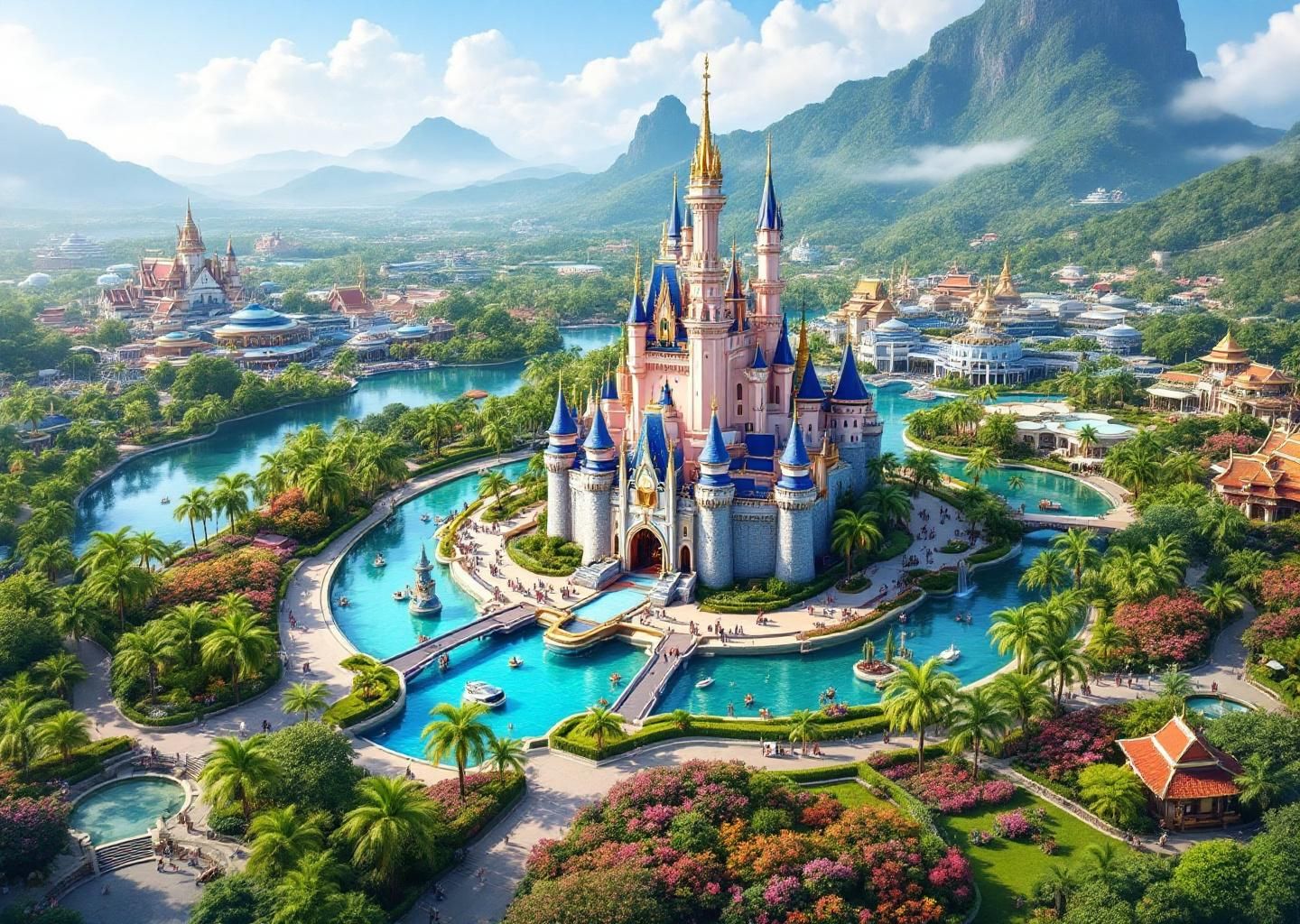
If you thought Disney’s global expansion was slowing down, think again. Thailand’s government just confirmed it’s actively pursuing plans to bring a world-class Disney theme park to the country—and this isn’t just wishful thinking from local officials.
According to The Nation Thailand, Thailand’s Transport Minister is exploring the possibility of building a Disney or Universal theme park in the Eastern Economic Corridor, replacing a previously proposed entertainment complex that would have included casinos. The shift represents a major strategic pivot for the Thai government, which now sees a family-friendly Disney park as a more viable investment than gambling-centered entertainment.
Why Thailand Is Ditching Casinos for Disney
Deputy Prime Minister and Minister of Transport Phiphat Ratchakitprakarn revealed the updated plan on December 9, explaining that theme park operators are reportedly hesitant to invest in projects that include gambling facilities. That’s not surprising—Disney has built its brand on family-friendly entertainment, and casinos don’t exactly align with that image.
The decision to pivot away from casinos and toward a theme park like Disneyland is strategic. Thailand wants to attract international tourists and families, not just gamblers. A Disney resort would position Thailand as a major family vacation destination in Southeast Asia, competing directly with established Disney properties in Tokyo, Hong Kong, and Shanghai.
This is also about optics. Thailand’s Vision 2030 economic development plan aims to transform the country into a global tourism powerhouse. A Disney park sends a very different message to the world than a casino complex—it signals that Thailand is serious about becoming a premier destination for travelers of all ages.
The Eastern Economic Corridor Location
The proposed Disney park would be built in Thailand’s Eastern Economic Corridor, a massive development zone spanning four provinces: Chonburi, Rayong, Chachoengsao, and Chanthaburi. Officials have been instructed to identify suitable land parcels up to 4.8 million square meters (about 1,186 acres) to support the project.
For context, that’s larger than Disneyland in California (roughly 500 acres) but smaller than Walt Disney World in Florida (about 25,000 acres). If Disney builds in Thailand, it would likely be a resort-scale development similar to Tokyo Disney Resort or Hong Kong Disneyland Resort—multiple parks, hotels, and entertainment districts all in one location.
The EEC location makes sense for several reasons. It’s relatively close to Bangkok (about 90 minutes by car), it’s part of a region already slated for massive infrastructure investment, and it has direct access to international airports via a planned high-speed rail line. Disney doesn’t just build theme parks—it builds destinations. The EEC provides the infrastructure foundation Disney would need to create a world-class resort.
This Is About Funding a High-Speed Rail Project
Here’s where things get interesting: Thailand isn’t just building a Disney park for fun. The theme park is part of a larger strategy to justify and fund a high-speed rail line connecting three major airports.
Thai officials refer to projects like the Disney park and a proposed 80,000-seat national stadium as “Magnet Projects”—attractions designed to drive tourism and investment, which in turn make the high-speed rail financially viable. Without major destinations along the rail line, there’s no compelling reason for travelers to use it. But add a Disney resort and a world-class sports stadium? Suddenly, you have a transportation network that pays for itself.
This is smart infrastructure planning. Instead of building expensive transit projects and hoping people use them, Thailand is creating reasons for people to travel to the EEC. The rail line becomes an asset rather than a liability, and the region transforms into a legitimate tourist destination instead of just an industrial zone.
Where Things Stand Now
Let’s be clear: this is not a done deal. Thai officials have emphasized that the Disney park proposal is in its “earliest conceptual stages,” with no construction begun and no final agreement with Disney.
Feasibility studies are underway, and the government is exploring how to attract Disney (or potentially Universal) to invest in the project. These are long-term concepts that may not be completed during the current government’s term, which means we’re talking about a timeline measured in years, not months.
But the fact that Thailand’s Transport Minister is publicly discussing this plan and actively working to secure land suggests this is more than just talk. When government officials start identifying specific locations and conducting feasibility studies, that’s a sign they’re serious about making it happen.
Why Disney Might Actually Do This
Thailand offers Disney something increasingly rare: a greenfield opportunity in a high-growth market.
Disney already has a presence in Asia through Tokyo, Hong Kong, and Shanghai, but Southeast Asia remains largely untapped. Thailand sits at the geographic center of ASEAN nations with a combined population of over 600 million people. A Disney resort in Thailand would be accessible to tourists from Vietnam, Malaysia, Singapore, Indonesia, the Philippines, and Myanmar—markets that currently require long-haul flights to reach the nearest Disney park.
Thailand also has a well-established tourism infrastructure, political stability (relative to some other countries in the region), and a government that’s actively working to make this project financially attractive. Disney doesn’t have to build everything from scratch—the EEC already has roads, airports, and utilities. The high-speed rail project would provide direct access to Bangkok and multiple international airports. From Disney’s perspective, that reduces risk and upfront investment.
And let’s not forget: Disney is facing challenges in its U.S. parks. Attendance has been soft at times, ticket prices are approaching consumer resistance levels, and the company is constantly battling criticism about affordability. International expansion allows Disney to tap into new revenue streams without cannibalizing its existing U.S. customer base.
What a Thailand Disney Resort Might Look Like
Disney hasn’t released any concept art or plans, but we can make educated guesses based on recent international projects.
Tokyo Disney Resort and Hong Kong Disneyland both started with a single park and later added second parks (Tokyo DisneySea and Hong Kong Disneyland’s expansion areas). Shanghai Disneyland opened as a single park but was designed with expansion space from day one. A Thailand resort would likely follow a similar model: one park at launch, with land reserved for future expansion.
The park would need to reflect Thai culture and appeal to Southeast Asian audiences. That means incorporating local stories, characters, and themes—much like Shanghai Disneyland features attractions based on Chinese folklore and Hong Kong Disneyland includes culturally specific entertainment.
Expect heavy use of Disney’s biggest franchises: Marvel, Star Wars, Frozen, and classic Disney characters. These are the IPs that drive merchandise sales and attract international visitors. But you’d also likely see unique attractions that can’t be found anywhere else, giving guests a reason to visit Thailand even if they’ve already been to other Disney parks.
The Competitive Landscape
Thailand isn’t just competing for Disney—it’s competing with other countries that want a piece of the theme park boom.
Saudi Arabia is actively courting Universal Studios for a park in Qiddiya City. Abu Dhabi has announced plans for a Disney-branded development. The United Arab Emirates already operates IMG Worlds of Adventure, one of the world’s largest indoor theme parks. The Middle East and Southeast Asia are becoming battlegrounds for major theme park operators, and countries are offering significant incentives to land these projects.
Thailand’s advantage is geography. It’s closer to major population centers in Asia than Middle Eastern locations, it has an established tourism industry, and it’s already a top destination for international travelers. In 2024, Thailand welcomed over 35 million international tourists. A Disney resort could push that number even higher.
The Timeline Is Anyone’s Guess
If—and this is a big if—Disney agrees to build in Thailand, we’re looking at a timeline measured in years, possibly a decade or more.
For context, Shanghai Disneyland took roughly five years from groundbreaking to opening, and that was with the full support of the Chinese government and Disney’s existing experience operating in Asia. A Thailand park would require extensive planning, environmental studies, negotiations, infrastructure development, and construction. Even under the most optimistic scenario, you’re not seeing a Disney park in Thailand before the early 2030s.
But that doesn’t mean it’s not worth paying attention to. Major theme park projects start with announcements like this. The fact that Thailand’s government is publicly pursuing Disney and conducting feasibility studies suggests momentum is building.
What This Means for Disney Fans
If Thailand successfully lands a Disney resort, it would mark Disney’s 13th theme park worldwide and the fourth Disney resort in Asia. That’s significant.
It would give Southeast Asian travelers a nearby Disney destination, eliminating the need for expensive trips to Tokyo, Hong Kong, or Shanghai. It would create a new bucket-list destination for Disney fans who want to experience every park around the world. And it would likely feature unique attractions and experiences that can only be found in Thailand.
For the broader theme park industry, a Disney resort in Thailand would intensify competition for tourism dollars in Asia and could spur other major operators to expand in the region as well. If Disney and Universal both build parks in Asia and the Middle East over the next decade, we could be entering a new golden age of theme park development.
Not a Done Deal, But Worth Watching
To be clear: Thailand’s Disney park is not confirmed, not funded, and not under construction. This is a proposal in its earliest stages, and there’s no guarantee it will ever happen.
But the fact that Thailand’s government is actively working to make it happen—identifying land, conducting feasibility studies, and publicly courting Disney—suggests this is more than just a pipe dream. Countries don’t invest this much effort into projects they don’t believe are viable.
Disney has proven it can successfully operate international resorts, and Southeast Asia represents one of the few remaining high-growth markets where the company doesn’t have a presence. The economic case for expansion is strong, and Thailand is rolling out the red carpet to make it happen.
Whether this becomes reality depends on negotiations between Thailand’s government and Disney, the results of feasibility studies, and whether the financial terms make sense for both parties. But if you’re a Disney fan, this is a story worth following.
Thailand could be on the verge of joining an exclusive club of countries that host Disney resorts. And if it happens, it would reshape the theme park landscape in Asia for decades to come.
Related Posts

The Frightfully Fun Parade Is Gone. What Disneyland Is Doing Instead Is Way More Interesting.
Read more
Disney Cruise Line Quietly Tightened Three Rules This Week — and One of Them Will Sting
Read more
Universal Has a July Opening Date — And It's Unlike Any Park They've Ever Built
Read more