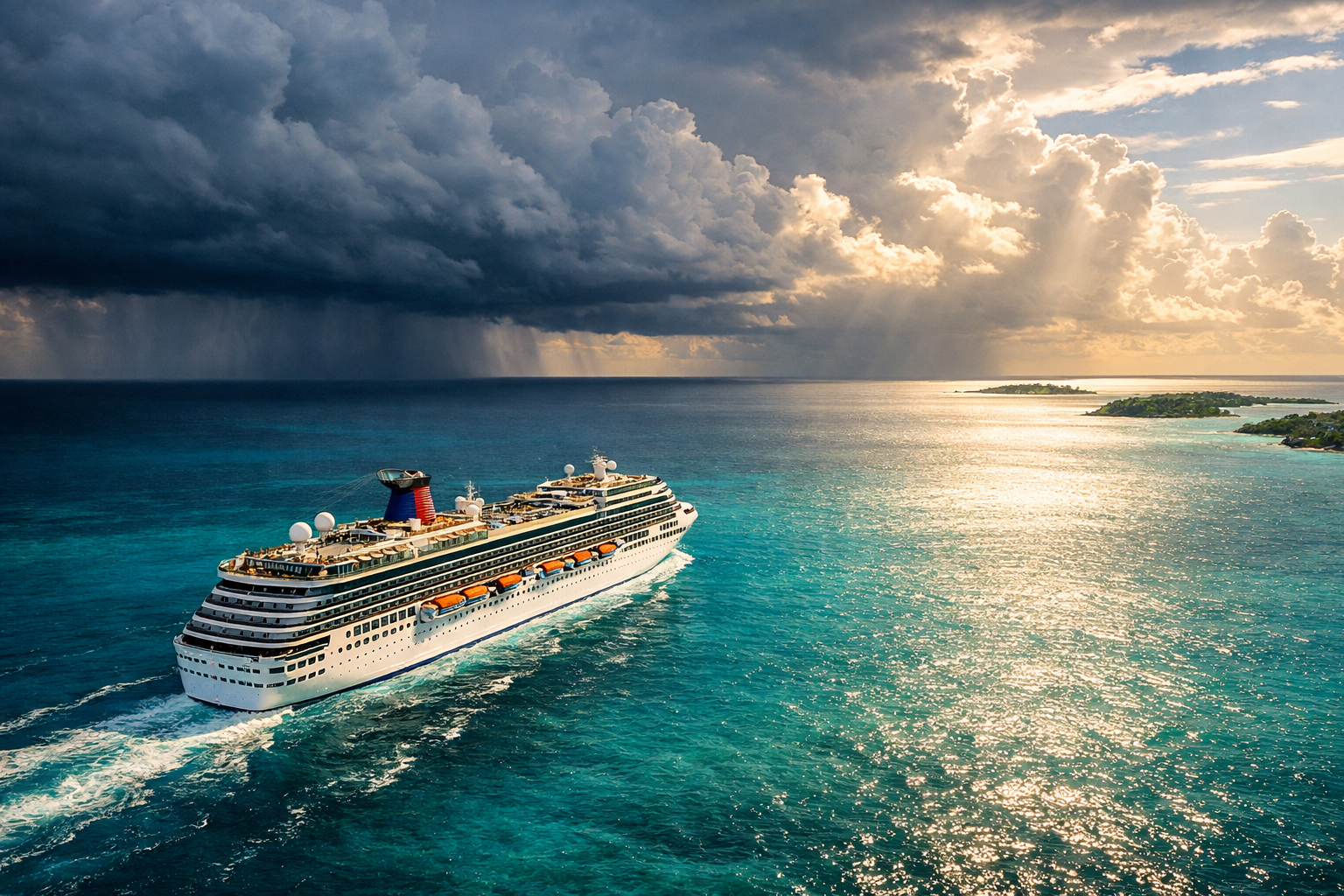
Thousands of Cruise Passengers Are Stranded in the Persian Gulf—And No One Knows When They Are Getting Home
Thousands of Cruise Passengers Are Stranded in the Persian Gulf—And No One Knows When They’re Getting Home If you have family or friends on a cruise in the...
Thousands of Cruise Passengers Are Stranded in the Persian Gulf—And No One Knows When They’re Getting Home
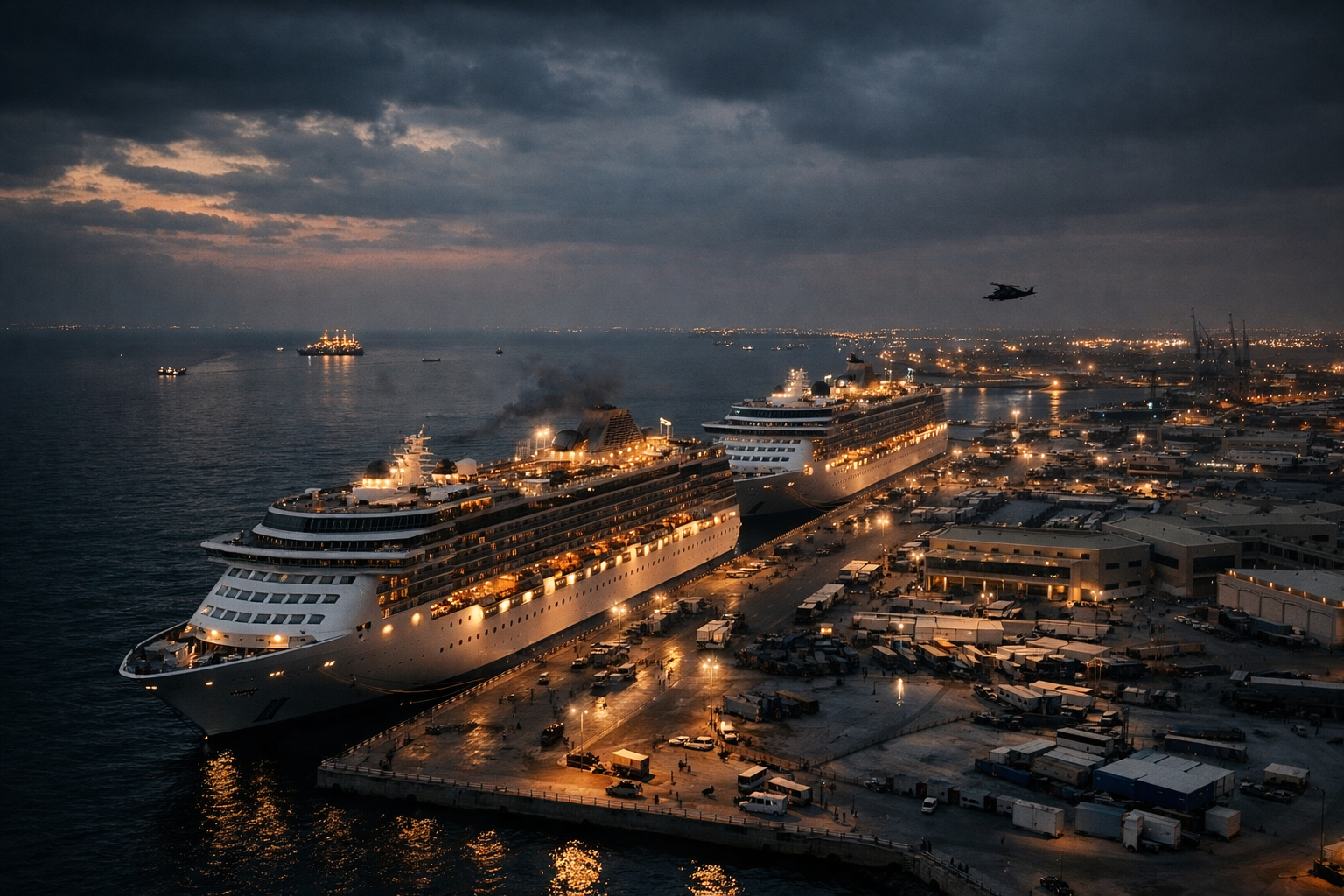
If you have family or friends on a cruise in the Middle East right now, here is what is happening: missiles are landing in the water near docked ships, regional airspace has been shut down, the Strait of Hormuz is closed to commercial shipping, and thousands of passengers have no clear path home.
This is not a drill, and it is not a minor itinerary change.
According to reporting from Euronews, at least six cruise ships carrying thousands of passengers are currently berthed at ports across the Gulf—in Dubai, Abu Dhabi, and Doha—unable to sail out and unable to fly home. The crisis escalated rapidly after U.S. and Israeli forces launched strikes on Iranian military targets, prompting Iran to retaliate with missile fire across the region.
What Is Happening on the Ships Right Now
The most alarming scene unfolded aboard TUI Cruises’ Mein Schiff 4, docked in Abu Dhabi. A missile struck the water not far from the ship, witnesses reported, with clouds of black smoke visible rising over the sea. At the time of reporting, it was unclear whether any passengers or crew were injured.
Passengers on all affected vessels have been ordered to stay off open decks and to move away from windows when possible. On ships docked near Qatar, passengers are receiving active alerts from Qatar Civil Defence on their smartphones warning of potential incoming missile threats.
This is the reality these travelers are waking up to every morning right now.
The ships currently stranded in the region include:
Mein Schiff 4 (TUI Cruises) — Abu Dhabi, UAE — approximately 2,500 passengers and 1,000 crew Mein Schiff 5 (TUI Cruises) — Doha, Qatar MSC Euribia (MSC Cruises) — Dubai, UAE Celestyal Discovery (Celestyal Cruises) Celestyal Journey (Celestyal Cruises) Aroya (Aroya Cruises, Saudi Arabia)
Why Getting Home Is So Complicated
Here is where it gets even more complicated. Getting stranded passengers home is not simply a matter of booking flights.
Numerous countries across the region have closed their airspace entirely, which means return flights are grounded regardless of what cruise lines want to do. Passengers on Mein Schiff 5, for example, were reportedly brought to the airport in Doha after waiting approximately ten hours, only to be turned away and returned to the ship. They had to leave their luggage at the airport.
And sailing out? The Strait of Hormuz — the narrow waterway connecting the Persian Gulf to the open ocean — is closed to commercial shipping. Only vessels with ties to China or Russia have reportedly been permitted passage. That means even if cruise lines wanted to sail their ships to safety, they have nowhere to go.
The situation, as Euronews described it plainly: it remains unclear when and how those stranded can be evacuated or continue their journeys.
What This Means for Cruise Travel in the Region
This crisis is a reminder of just how quickly geopolitical events can upend travel plans in ways that are completely outside a cruise line’s control — or your travel insurance’s standard coverage expectations.
The Middle East has been a growing destination for cruise lines over the past several years, with ports in Dubai, Abu Dhabi, Oman, and Qatar becoming popular stops on longer itineraries. The region attracted passengers looking for something different, and cruise lines obliged with more sailings in the Gulf during winter months.
MSC Cruises had already been quietly managing the deteriorating situation. Earlier this year, MSC Magnifica’s 118-night World Cruise — which was supposed to pass through the Middle East — was already rerouted to avoid the region, with Cape Town, South Africa emerging as an alternative gateway between Europe and Asia. The line had pledged to swap in “alternative locations of equal appeal,” though full details of those substitutions were never fully spelled out to passengers.
Now, the situation has escalated far beyond itinerary tweaks.
What Should Future Cruise Passengers Do
If you are booked on a cruise that includes any Middle Eastern ports in the coming weeks or months, here is what we would recommend:
Contact your cruise line directly. Most cruise lines will implement itinerary changes for sailings in conflict zones, but they won’t always proactively notify every passenger the moment a decision is made. Be proactive.
Review your travel insurance policy carefully. Standard trip interruption and cancellation coverage may not cover “acts of war” or active military conflict. Look specifically for “cancel for any reason” coverage and understand whether your policy covers travel advisories or only formal government evacuation orders.
Watch official travel advisories. The U.S. State Department, UK Foreign Office, and other national travel agencies issue real-time advisories. If your government advises against travel to a destination, that matters both for your safety and your insurance claim.
Understand your rights. When a cruise line changes your itinerary due to safety or security concerns, passengers typically receive future cruise credits or the option to cancel for a refund — but the specifics vary by line and booking terms. Ask explicitly before accepting any offer.
For those already in the region aboard any of the affected ships: follow all safety instructions from ship officers and local authorities. These cruise lines have crisis protocols, and while the situation is frightening, experienced crew teams are trained to manage exactly these scenarios.
We are continuing to monitor this situation and will update as conditions develop.
This article is based on reporting from Euronews, published March 1, 2026.
Related Posts

The Frightfully Fun Parade Is Gone. What Disneyland Is Doing Instead Is Way More Interesting.
Read more
Disney Cruise Line Quietly Tightened Three Rules This Week — and One of Them Will Sting
Read more
Universal Has a July Opening Date — And It's Unlike Any Park They've Ever Built
Read more