Universal Just Patented a Flying Theater Ride That Moves Every Seat Independently
A newly published patent from Universal reveals a mechanically-linked seating system designed to make flying theater rides dramatically more immersive — and it could reshape what these attractions feel like.
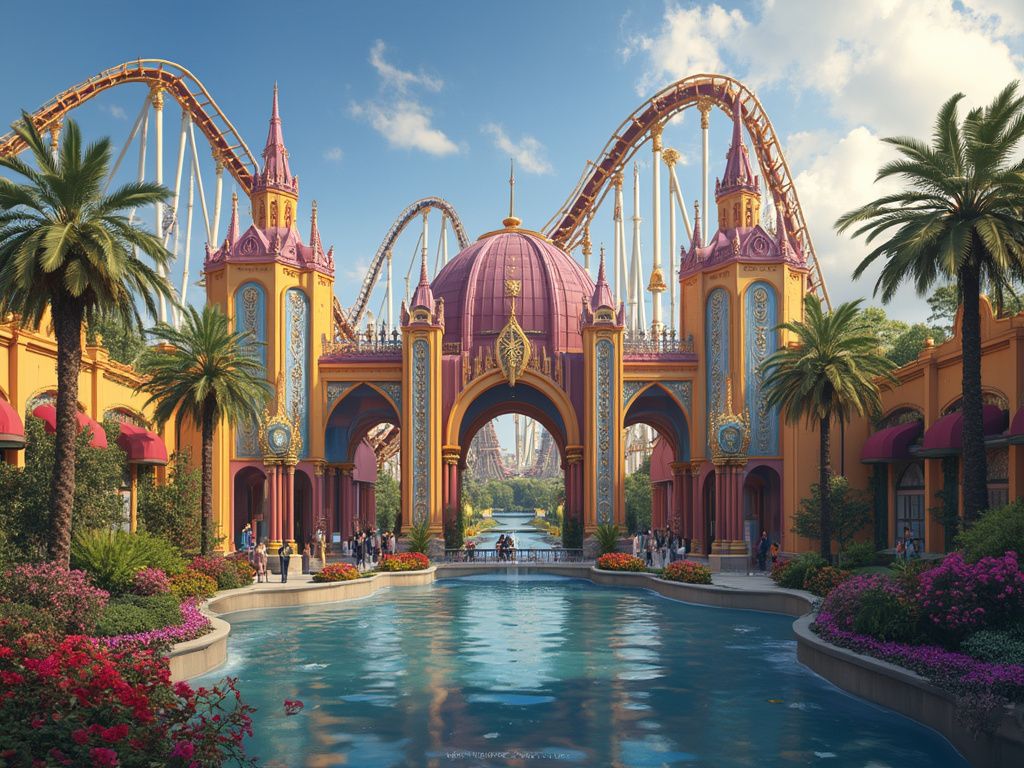
If you’ve ever ridden Soarin’ at Disney or Flight of Passage at Animal Kingdom, you know the basic formula behind a flying theater: you sit in a row of seats, a massive screen wraps around you, and the entire row tilts and sways to simulate flight. It works well enough. But Universal thinks it can do better — and a newly published patent suggests the company is working on something that could meaningfully change how these rides feel.
The patent, first reported by Theme Park Insider, describes a “mechanically-linked seating” system that replaces the single pivot point used by conventional flying theaters with multiple couplings and actuators on individual seats. Instead of an entire row of riders moving in lockstep, each seat would be able to tilt, lean, and shift independently.
Why That Matters More Than It Sounds
Current flying theater rides have a physical limitation baked into their design. Every seat in a row shares the same range of motion because they’re all connected to a single mechanism. When the row banks left, every rider banks left at the same angle, at the same speed. It creates a smooth, coordinated sensation — but it also means the ride can’t do much to make you feel like you’re personally navigating the experience rather than watching it unfold.
Universal’s system would change that equation. Patent diagrams show seats tilting at different angles simultaneously — picture an entire row leaning right, but the seat on the far end dipping more aggressively than the one in the middle. The result is motion that feels less like a synchronized platform and more like individual flight.
Theme Park Insider describes the concept as sitting between a traditional flying theater and a motion-base simulator like Star Tours, which uses individual ride vehicles on full motion platforms. Universal’s design would bring some of that per-rider variability to the flying theater format without requiring separate ride vehicles for every guest.
Where This Could Show Up
The patent doesn’t name a specific park or attraction, and patents don’t always turn into built rides. But the timing is notable. Universal is deep into a period of aggressive investment — Epic Universe opened last year, and the company has shown no signs of slowing its ride development pipeline. A next-generation flying theater would fit comfortably into any of Universal’s parks, and the format pairs naturally with the kind of IP the company licenses.
Fan speculation has already landed on obvious candidates: a Quidditch-themed attraction, a How to Train Your Dragon flight experience, or something tied to one of Universal’s existing franchises. None of that is confirmed, but the technology described in the patent is clearly designed for a narrative ride experience where riders feel like they’re piloting or riding something, not just watching a film.
The Bigger Picture
Flying theaters are one of the most popular ride formats in the industry precisely because they’re accessible — no height requirements, no intense forces, wide appeal across age groups. But they’ve also been relatively static in their design evolution. Soarin’ opened at Disney California Adventure in 2001, and while the screens have gotten bigger and the films have changed, the core ride system hasn’t changed dramatically in 25 years.
If Universal actually builds what this patent describes, it would represent the most significant upgrade to the flying theater concept in over two decades. And given Universal’s track record of turning patents into real attractions — the company’s portfolio of ride system patents has historically been a reliable preview of what’s coming — this one is worth watching.
Source: Theme Park Insider
Related Posts
The Frightfully Fun Parade Is Gone. What Disneyland Is Doing Instead Is Way More Interesting.
Read more
Disney Cruise Line Quietly Tightened Three Rules This Week — and One of Them Will Sting
Read more
Universal Has a July Opening Date — And It's Unlike Any Park They've Ever Built
Read more