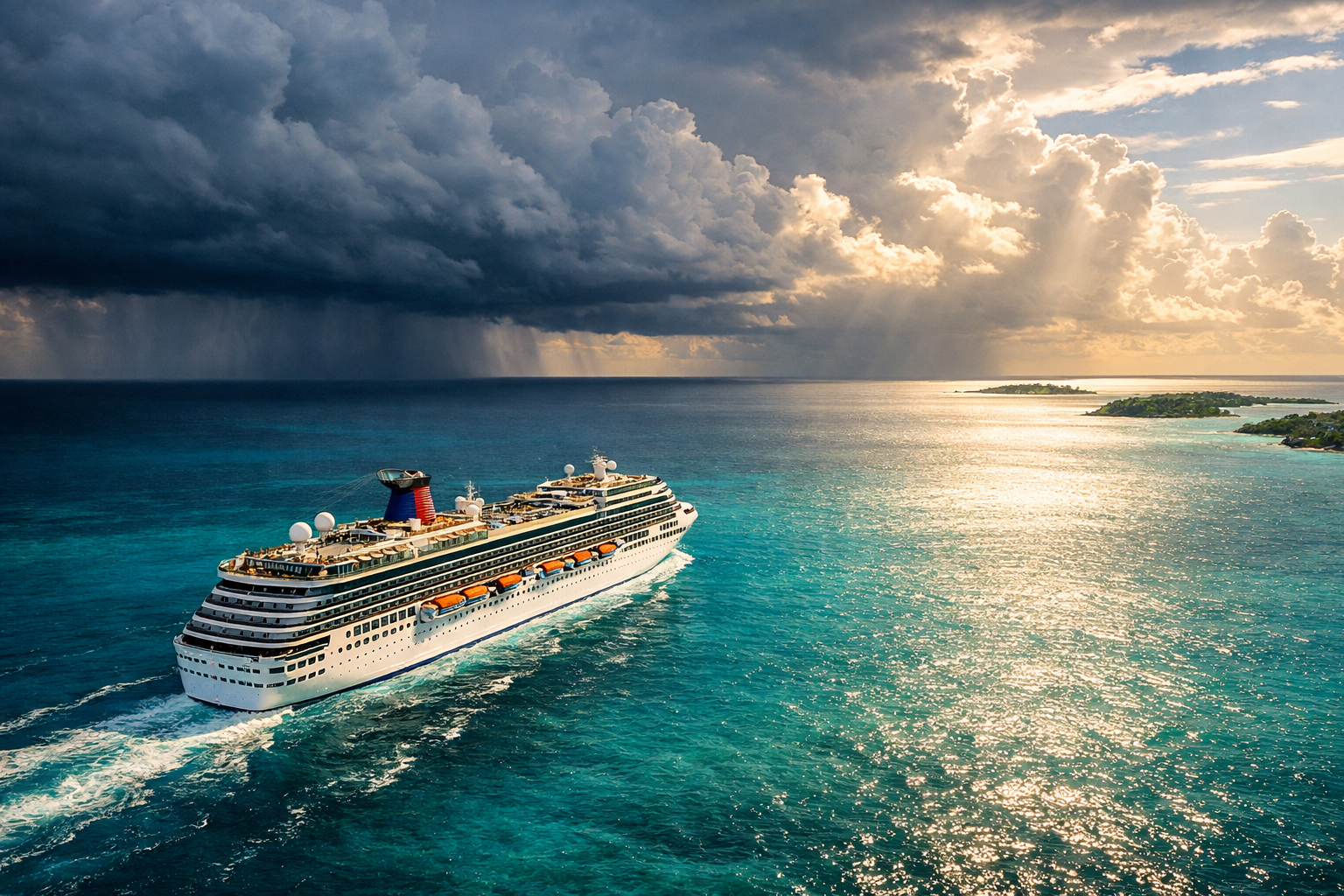
The World's First Hydrogen-Powered Cruise Ship Just Touched Water for the First Time
Viking's groundbreaking Viking Libra reached a major construction milestone this week when the world's first hydrogen-powered cruise ship was floated out at Fincantieri's shipyard in Ancona, Italy.
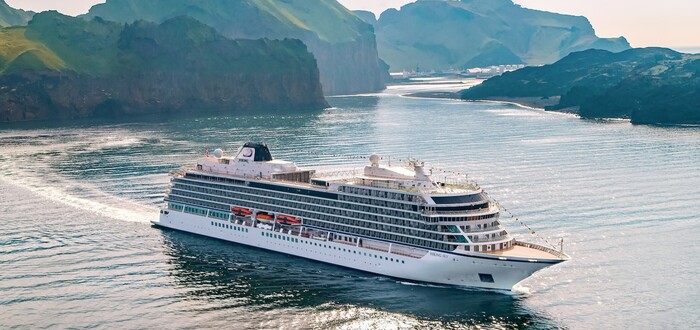
On March 19, a milestone happened quietly in a shipyard on the Italian coast that could change what cruising looks like for decades to come. Viking’s newest vessel, Viking Libra, was floated out at Fincantieri’s Ancona shipyard — marking the first time the world’s first hydrogen-powered cruise ship has touched water.
According to Viking’s official announcement, the float out ceremony began when a ceremonial cord was cut, allowing water to flow into the building dock. Over the course of two days, Viking Libra was set afloat and moved to a nearby outfitting dock where she will undergo final construction and interior build-out before her scheduled delivery in late 2026.
What Makes Viking Libra Different
The short answer: her engines.
Viking Libra runs on a hybrid propulsion system powered by liquefied hydrogen and fuel cells — technology developed by Isotta Fraschini Motori (IFM), a Fincantieri subsidiary specializing in advanced fuel cell systems. The system is capable of producing up to six megawatts of power and, critically, can operate the ship with zero emissions.
That zero-emission capability isn’t just a marketing point. It means Viking Libra will be able to sail in environmentally sensitive areas — fjords, protected coastlines, polar-adjacent itineraries — where emissions restrictions are tightening and where traditional diesel-powered ships may eventually be prohibited or severely limited. For travelers who want to visit those kinds of places, that matters.
The Ship Itself
Beyond the propulsion system, Viking Libra is a ship that fits neatly into Viking’s established formula. She measures 239 meters in length, weighs approximately 54,300 gross tons, and carries 998 guests across 499 staterooms. That keeps her firmly in the small-ship category — Viking’s sweet spot — where the experience is designed to feel more intimate and destination-focused than what you get on a 5,000-passenger mega-ship.
Her inaugural season will take her through the Mediterranean and Northern Europe, itineraries that are well-suited to her scale and well-matched to the kind of traveler Viking has always attracted: someone who wants to actually see a place, not just dock near it.
Why This Moment Matters
A float out isn’t a delivery. There’s still months of work ahead — finishing the interior, outfitting the staterooms, testing every system. But in shipbuilding, floating out is a significant threshold. It means the hull is complete and structurally sound. The hardest part of building the ship is done.
And the fact that this particular float out represents the first hydrogen-powered ocean-going cruise ship in history makes it worth paying attention to. The cruise industry has faced real scrutiny over its environmental footprint, and the path forward has been murky. Viking Libra is one concrete answer to what that path might look like.
Viking Chairman and CEO Torstein Hagen has described the decision to build hydrogen-powered ships as a “principled choice” — language that suggests this isn’t a one-off experiment. A sister ship, Viking Astrea, is already under construction and scheduled for delivery in 2027.
What It Means for Future Cruise Travelers
If you’ve been curious about Viking but haven’t booked yet, Viking Libra is worth watching. She’s slated to begin sailing Mediterranean and Northern European itineraries after delivery in late 2026. If her itineraries and deployment schedule appeal to you, booking early — as with any new ship — is typically how you get the best pricing.
More broadly, if you care about where cruising is headed environmentally, Viking Libra is a meaningful data point. Whether hydrogen propulsion becomes an industry standard depends largely on how well ships like this one actually perform in service. This float out is the beginning of finding out.
Related Posts

The Frightfully Fun Parade Is Gone. What Disneyland Is Doing Instead Is Way More Interesting.
Read more
Disney Cruise Line Quietly Tightened Three Rules This Week — and One of Them Will Sting
Read more
Universal Has a July Opening Date — And It's Unlike Any Park They've Ever Built
Read more